

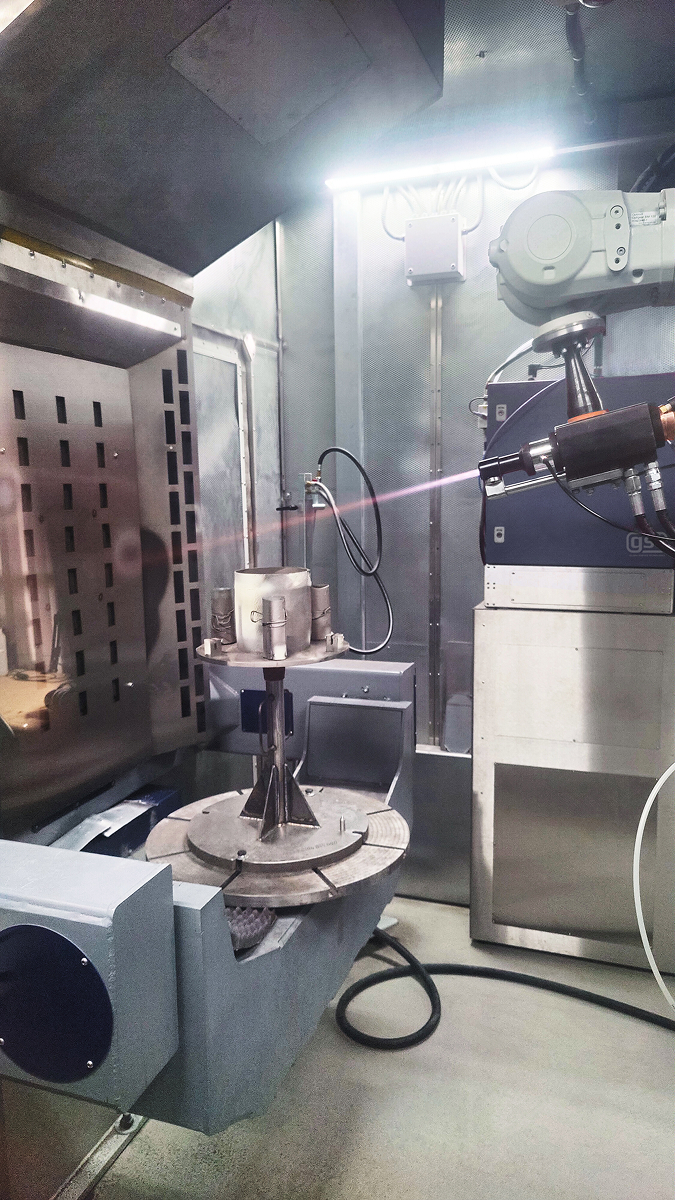
Flame spray
Wire Flame Spray
Wire Metallizing is also called Flame Wire Spray or Combustion Wire Metallizing. Wire Metallizing is normally ranking the lowest among the thermal Spray Coating series because of the coating layer characteristics and industrial application demand and general perceptions.
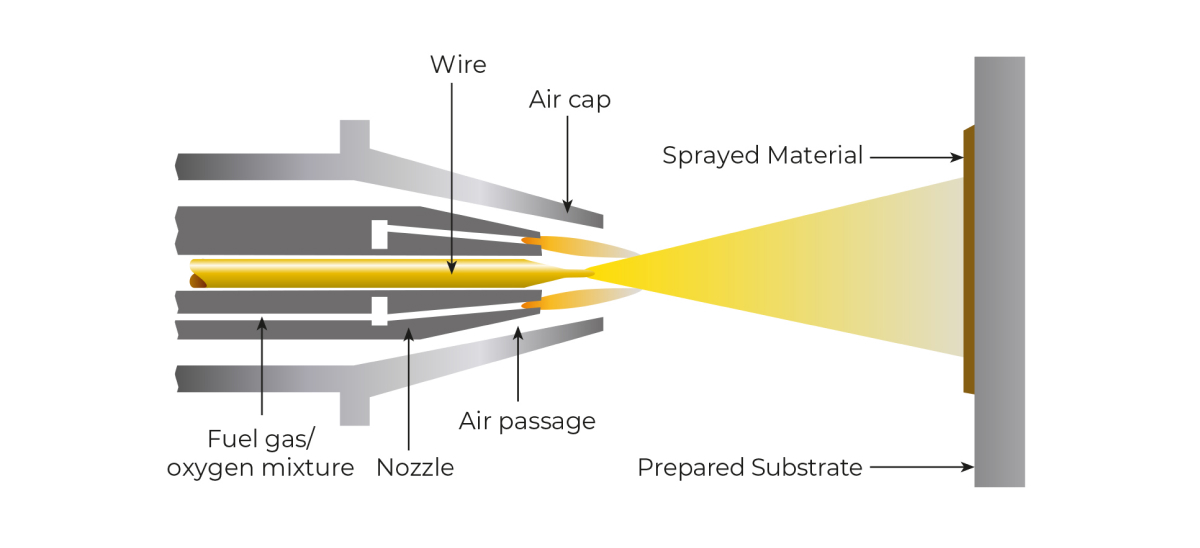
The wire feed rate and flame settings must be balanced to produce continuous melting of the wire and a fine particulate spray. The annular compressed air flow atomizes and accelerates the particles towards the substrate. This wire metallizing system is particularly good for doing coating work on-site or at a remote locations. The wire metallizing process also allows the base material to stay relatively cool. There is no heat affected zone, substrate phase change etc.
In general industry applications, wire metallizing can actually demonstrate all the necessary characteristics, such as good wear resistance because moderately oxidized coating actually demonstrating higher hardness. Its higher porosity is good for oil retention and improved wear resistant. Appropriate sealant is crucial when comes to anti-corrosion applications.
Powder Flame Spray
The Flame Powder Spray uses a very similar technique and background Thermal Spray theory as the Wire Metallizing process, except that the wire feedstock is replaced with a powder.
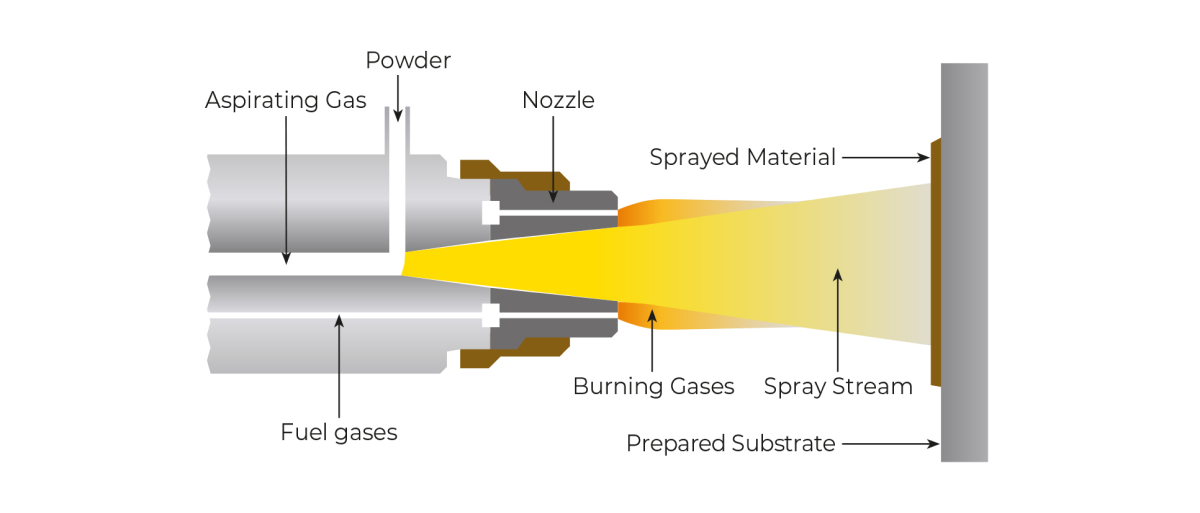
The fact that the feedstock here is “powder”, it allows a much wider range of materials. Nickel or cobalt-based self-fluxing alloys or ceramic materials can be easily processed into powder form giving a larger choice of coatings. In case of self-fluxing alloy, a subsequent fusing operation would produce metallurgical bonding of coating with diffusion to the substrate. Materials that are not possibly made in wire form can now be in the form of powder.
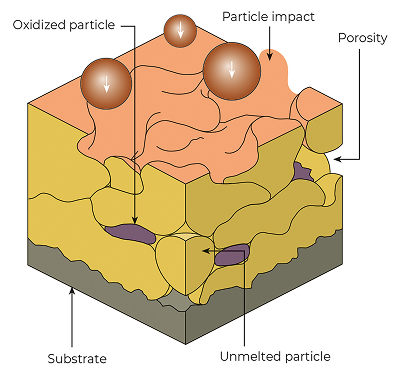
Powder is fed directly into the flame by a stream of compressed air or inert gas (Ar/N2). It is important that the powder is heated sufficiently as it passes through the flame. The carrier gas feeds powder into the centre of the annular combustion zone, where it is heated and propelled towards the substrate. A second outer annular gas nozzle feeds a stream of compressed air around the combustion flame, which accelerates the spray particles towards the substrate and focuses the flame.
Flame Spray process characteristics
- Low capital investment
- Low running costs
- Can be done on-site
- Adequate properties for low-stress build-up applications
- Adequate properties for sacrificial coatings