


Plasma Spray
Atmospheric Plasma Spray
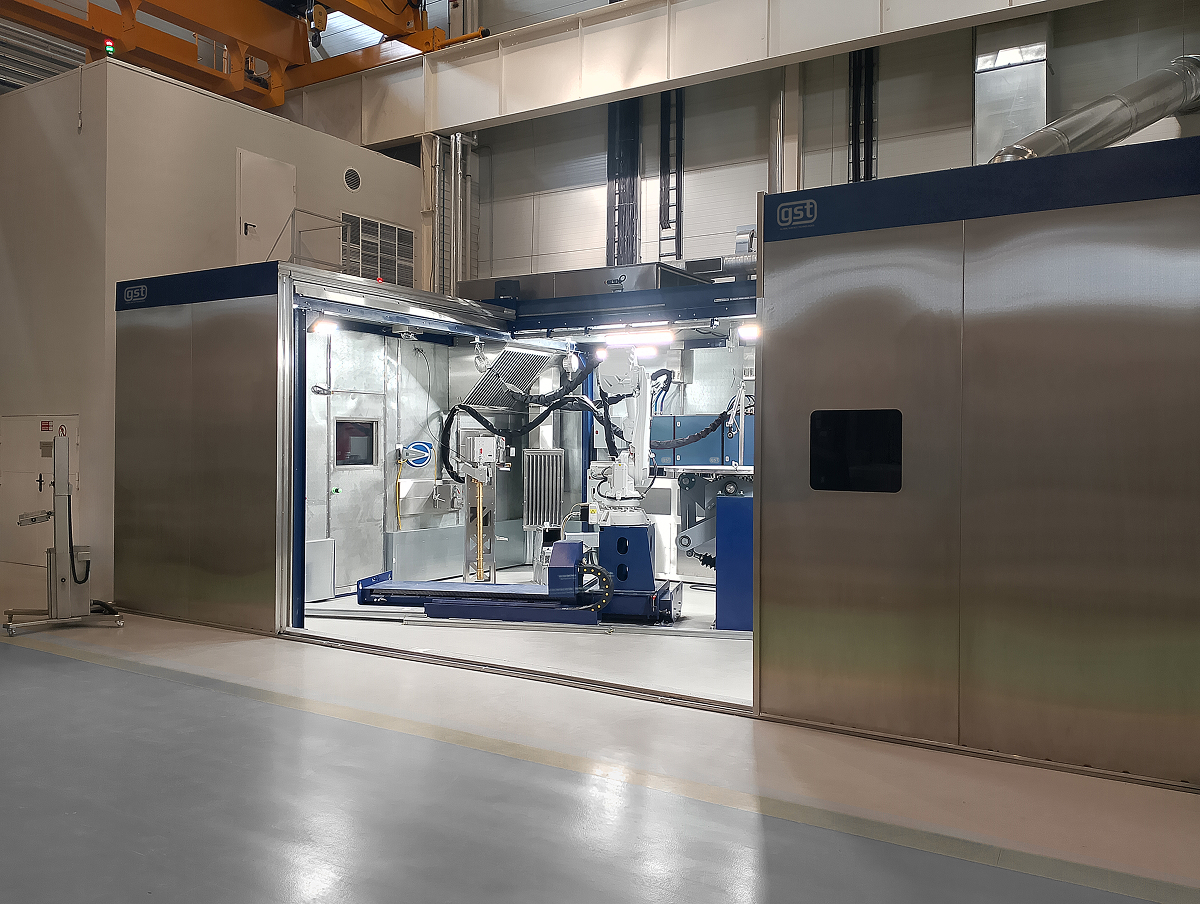
The development of plasma spray technology marked a major breakthrough in the thermal spray industry during the 1980s and 1990s. Its ability to meet the demanding requirements of aerospace engine components and industrial gas turbine applications drove its rapid adoption and positioned plasma spraying as one of the most important coating technologies in modern surface engineering. Plasma spraying is the only one among thermal spraying processes that utilize a high energy heat source to melt, atomize and accelerate fine particles onto a suitably prepared surface.
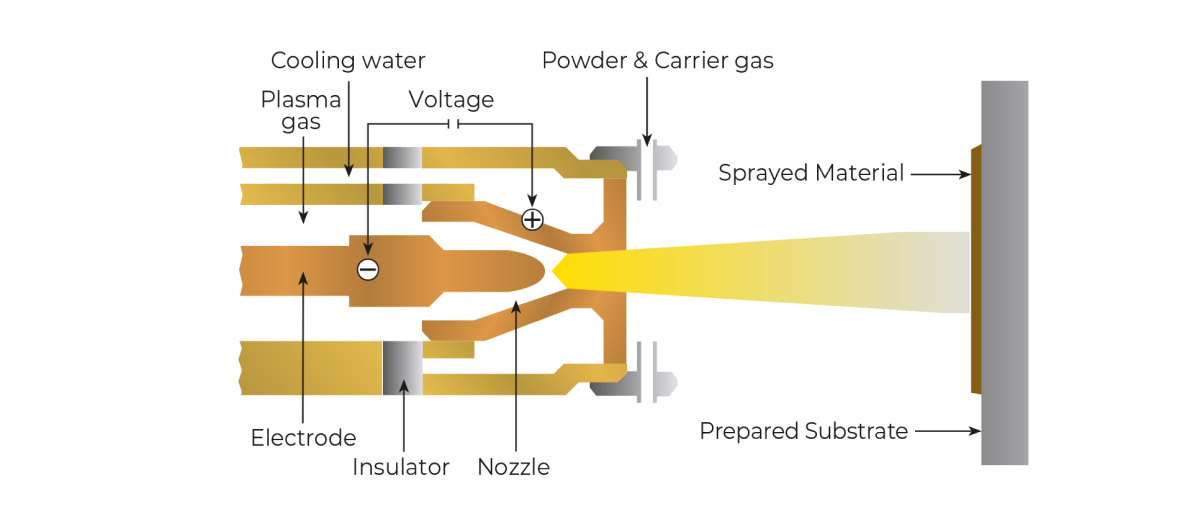
Upon impact with the substrate, the molten particles rapidly cool and solidify through heat transfer to the underlying material. As successive layers of particles accumulate, they form a coating structure composed of overlapping lamellae.
The temperature within a plasma flame typically ranges from 10 000 to 15 000 °C, while under extreme operating conditions it can reach temperatures of up to 30 000 °C. Due to these exceptionally high temperatures, plasma spraying is capable of processing and depositing a wide range of materials, including metals, carbides, ceramics, refractory metals, and oxides, enabling the formation of advanced protective and functional coatings.
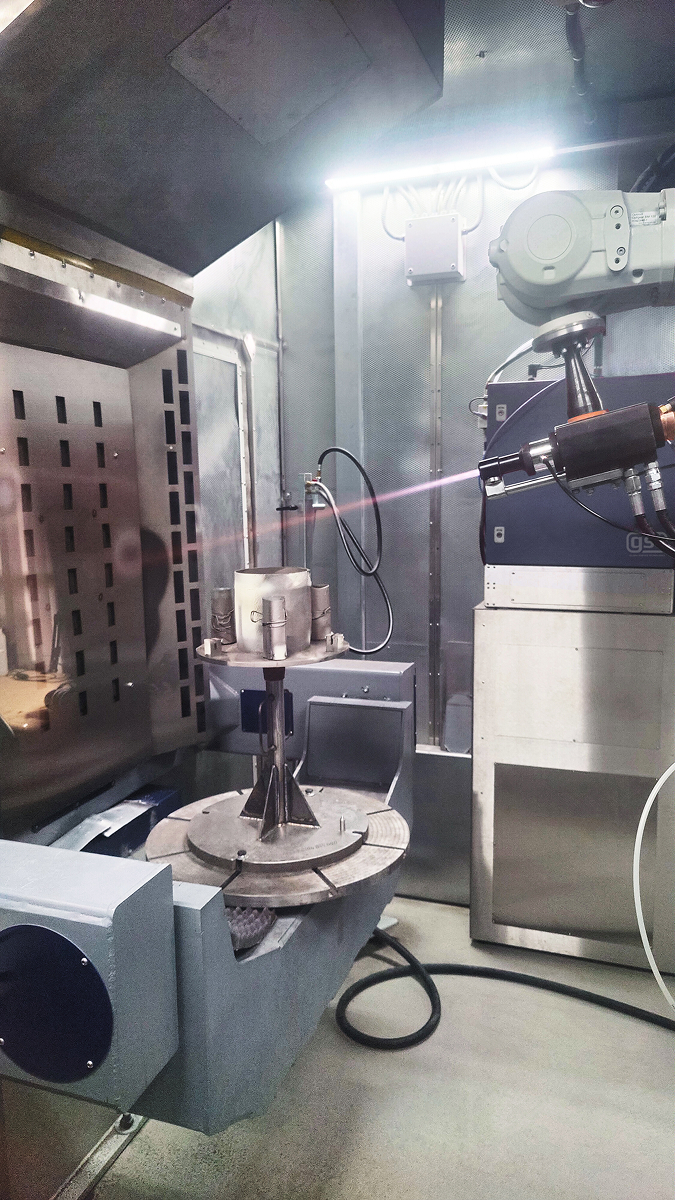
A highly controlled electric arc is generated between a tungsten cathode and a copper anode inside the plasma gun. An inert or reducing gas mixture is introduced into the space between the cathode and anode, where it becomes ionized and forms a high-temperature plasma. The plasma is then accelerated through the nozzle, creating a high-velocity jet. As the plasma stream travels, it partially recombines into a gaseous state, releasing significant thermal energy.
The consumable powder material is injected into the plasma/gas stream, where it is rapidly heated, melted or softened, and accelerated toward the substrate surface, forming a dense and strongly bonded coating layer.
For most plasma spray systems, a 200 A power supply is considered highly desirable to ensure stable operation and sufficient energy input. Due to the extremely high temperatures involved in the process, adequate cooling capacity is essential. A properly sized chiller system, combined with targeted cooling air jets directed at the workpiece, helps prevent substrate overheating and maintains process stability.
During plasma spraying, particle velocities typically range from Mach 1 to Mach 3, enabling high-quality coatings with excellent adhesion and controlled microstructure.
Vacuum Plasma Spray
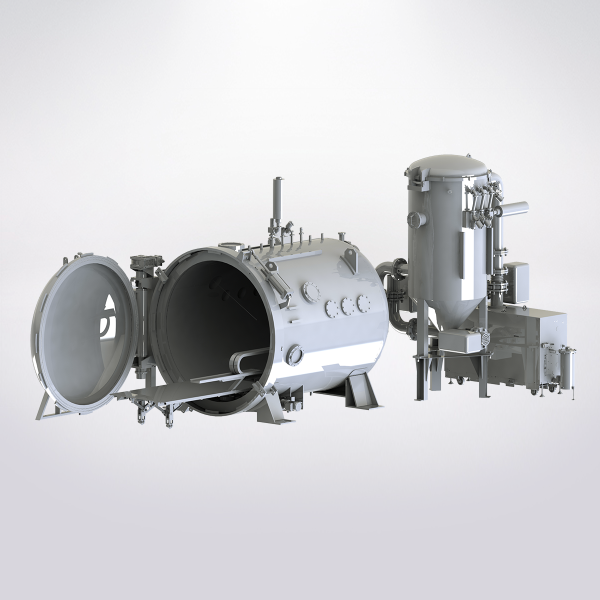
VPS (Vacuum Plasma Spray) works by injecting metal or ceramic powders into a hot gas plasma, which melts the powders. These molten droplets are then projected onto a substrate to form a coating. During the coating process, the VPS spray chamber is filled with an inert gas and maintained at low pressure, ensuring no oxidation takes place.
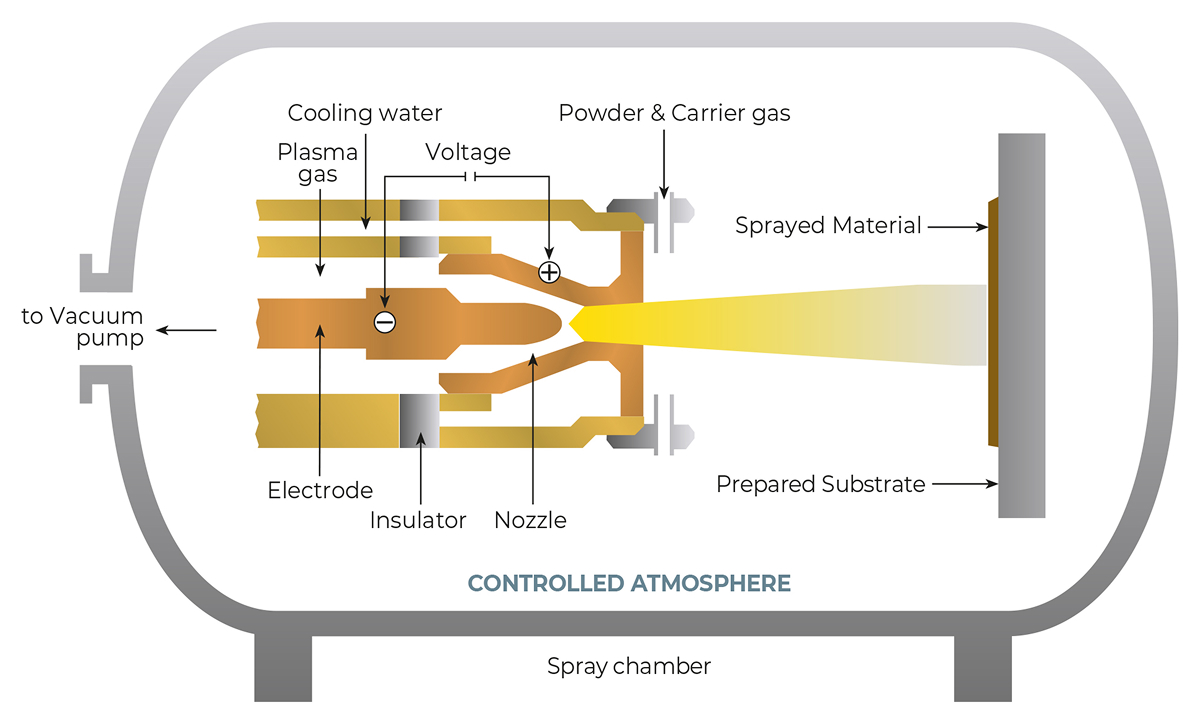
LPPS (Low pressure plasma spray) and VPS are two different designations for the same process. The “flame” (no fire is actually involved in the process) is a high-temperature plasma and spraying is performed in a low-pressure argon atmosphere. This process enables materials that are sensitive to oxidation to be sprayed, these are usually the so-called MCrAlYs. The coating is very dense, and due to the absence of oxygen during spraying no oxides are formed. The surface roughness is strongly dependent on the particle size used for spraying. Normally, a relatively high degree of roughness is created and the surface will be smoothened by a shot peening and/or polishing process after coating production.
Plasma spraying can be done in various atmospheres:
- Low pressure or soft vacuum (LPPS/VPS), for reactive metals such as Ti alloys
- Underwater