

High Velocity Oxygen Fuel (HVOF) spray systems are industrial thermal spray equipment for applying dense protective and functional coatings to parts exposed to wear, corrosion and demanding industrial service. HVOF spraying accelerates powder in an energetic jet and is especially effective for carbide and metal coatings. Unlike plasma or arc processes, the method relies on combustion energy and particle velocity rather than an electric heat source.
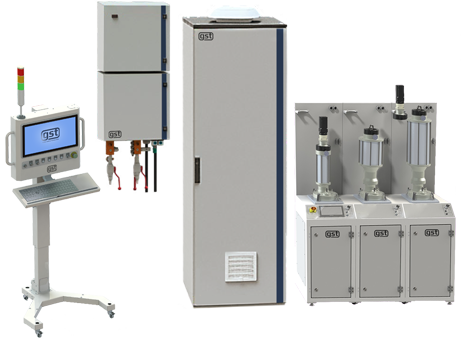
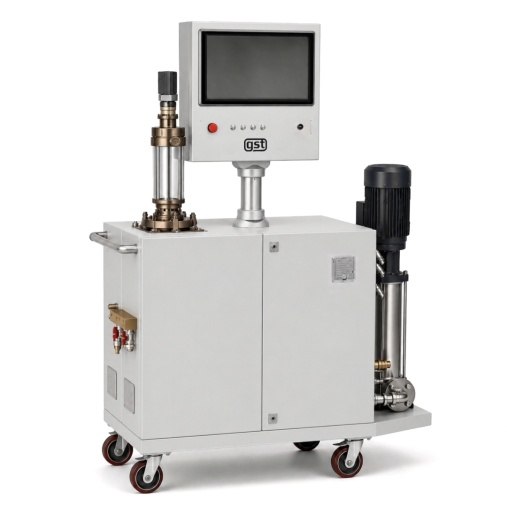
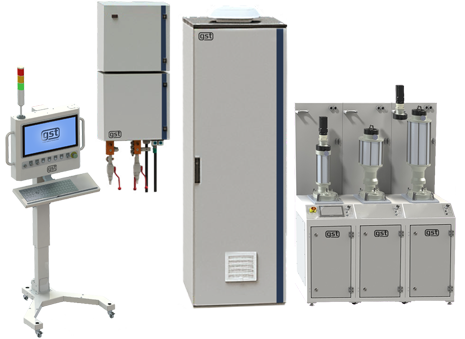
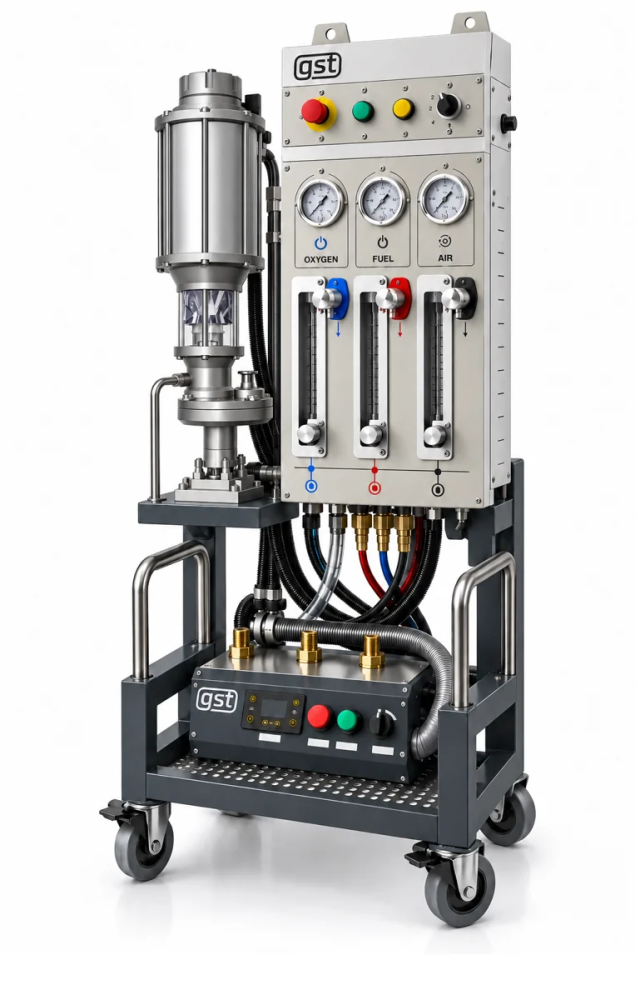
GST supplies HVOF equipment for automated coating production and mobile spraying. Each installation is configured around the coating material, component geometry, required quality, production rate and available utilities. The gun, material delivery, control equipment, cooling and automation are selected as one integrated package rather than as unrelated components.
How HVOF Works
In HVOF spraying, a controlled mixture reacts with oxygen inside a combustion chamber and expands through the gun to form a gas stream. Powder is introduced into this flow, heated and accelerated toward the prepared substrate. Particle velocity and temperature are balanced to support efficient deposition while limiting unnecessary thermal exposure.
During spraying, successive particle impacts build the coating layer. Stable powder feed, oxygen supply, spray distance, gun movement and cooling help maintain repeatable deposition. The resulting coatings can combine a dense structure with strong mechanical bonding when surface preparation and operating parameters are properly qualified.
Gas Fuel, Liquid Fuel and Ethanol Systems
Gas fuel hvof is a flexible choice for carbide and alloy materials. Liquid fuel hvof is selected for productive spraying where strong particle acceleration is required. Ethanol hvof uses ethanol fuel and offers clean combustion with a broad operating window. Compared with plasma or arc spraying, all three remain based on a pressurized flame.
Selection depends on feedstock chemistry, particle speed and temperature, deposition rate, utilities and production concept. Tungsten carbide is a major application, with chromium-carbide and alloy materials also widely processed. GST matches the HVOF fuel architecture to the required coating result.
What a Complete HVOF System Includes
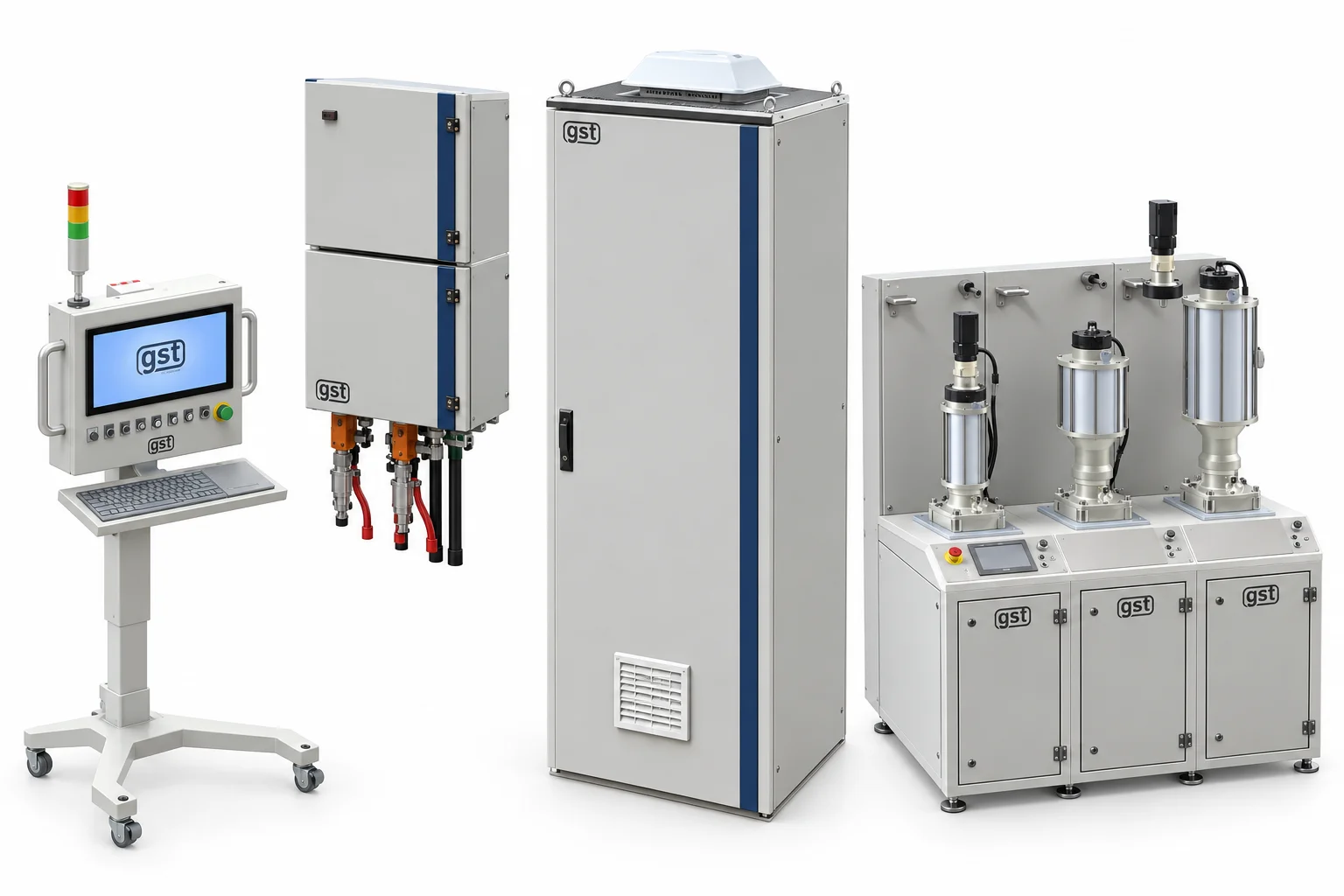
A complete HVOF system normally includes an hvof spray gun, powder feeder, process-control equipment, metering modules, carrier-medium supply, ignition and safety interlocks, and cooling. Depending on configuration, additional equipment can monitor utilities and coordinate start-up, shutdown and protective functions.
For automated spraying, the equipment can be integrated with a robot or manipulator, workpiece positioner, acoustic booth, extraction and filtration. Coordinated motion controls spray distance, angle and traverse rate, while centralized recipes improve production repeatability. GST can supply individual modules or integrate a complete coating cell.
Coating Properties
HVOF coatings are valued for high density, low porosity and high bond strength. Particle kinetic energy supports compact deposition, while controlled heating can reduce oxidation of suitable feedstock compared with equipment that exposes material to a hotter plasma jet.
Final coating quality depends on the coating chain. Powder morphology, surface preparation, operating conditions, cooling strategy and motion control influence density, bonding and finish. Consistent control is therefore important when the coating must deliver repeatable wear or corrosion performance.
Applications and Materials
Typical materials include WC-Co, WC-CoCr, Cr3C2-NiCr, nickel- and cobalt-based alloys and other metal powders qualified for HVOF spraying. Applications include aerospace coatings, oil and gas coatings, hydraulic components, rolls, valves, pumps, shafts and other industry components requiring protection or dimensional restoration.
HVOF spraying can also replace hard chromium plating in qualified applications where a dense carbide coating provides the required surface function. Suitability depends on component geometry, substrate, finishing route and specification, so hard-chrome replacement should be validated for each application rather than treated as a universal substitution.
Delivery and Support
GST supports HVOF projects from equipment selection through commissioning and operator training. Service can include installation, integration, start-up assistance, process development, equipment maintenance, spare parts and retrofit work, with the delivered system configured around the customer's production requirements.