

Thermal Spray Coatings for Medical Implants
Thermal spray is used in medical manufacturing to create functional surfaces on implants and selected medical devices. Applications include porous titanium on orthopedic and dental implants, hydroxyapatite coating systems, and wear-resistant or insulating layers on instruments where the coating is part of a validated manufacturing process.
GST supplies thermal spray systems to implant manufacturers and specialist service companies that require controlled coating capability in-house. The systems provide the process platform for applying defined materials; biocompatibility, implant performance, clinical validation and regulatory approval remain the responsibility of the medical-device manufacturer and its qualified process chain.
Titanium plasma spray coatings
Titanium plasma spray can be used to create a porous metallic surface on femoral stems, acetabular cups, spinal implants and selected dental implant components. The engineered surface morphology, including controlled roughness and porosity, is used by implant manufacturers to provide a structure intended to support mechanical fixation and bone ingrowth as part of the finished implant design.
Because titanium readily reacts with oxygen at elevated temperature, titanium coatings may be deposited by vacuum plasma spray or in a controlled protective atmosphere when oxidation control is required. The selected plasma spray process, powder specification, substrate preparation and post-process controls are established by the manufacturer for the qualified implant system.
Hydroxyapatite (HA) coatings
Hydroxyapatite is a calcium phosphate material chemically related to the mineral phase of bone. Hydroxyapatite coating is commonly applied by atmospheric plasma spraying and may be deposited over a metallic implant surface, including over a previously prepared titanium layer where the product design calls for a combined coating architecture.
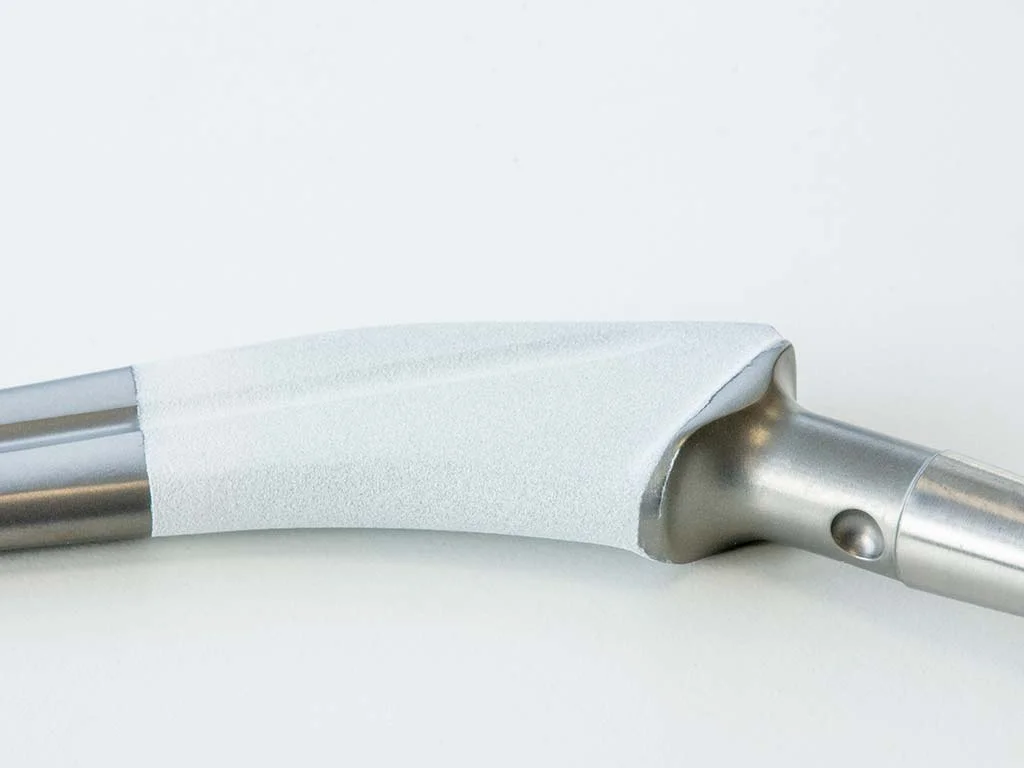
For HA coating production, manufacturers control feedstock condition, coating thickness, structure and process stability within their validated specification. GST systems provide the spraying and powder-feeding platform, while biological performance, acceptance criteria and release of the finished medical implant remain outside the scope of the spray system itself.
Coatings for medical devices and instruments
Thermal spray can also be used for wear-resistant and electrically insulating coatings on selected surgical instruments and electrosurgical devices. Material and process selection depend on the instrument function, substrate, required surface behavior and the manufacturer's validation route for the finished medical device.
Process control and repeatability
Medical coating production requires repeatable process parameters and traceable operating data across batches. GST control systems can support recipe management and recording of relevant spray parameters, while process validation, inspection plans, lot release and medical-device registration remain the responsibility of the manufacturer.
GST systems for medical coatings
For titanium applications, GST can configure VPS3000 vacuum plasma spray systems with appropriate powder feeding and controlled-atmosphere functions. For hydroxyapatite and other air-plasma applications, MP3000-AP platforms provide an atmospheric plasma spraying route that can be integrated with component handling and process control.
GST also supplies plasma spray systems, powder feeders and commissioning support for medical coating production. System configuration is selected around the coating material, component geometry, production volume and validated process sequence rather than around unverified clinical claims or generic medical performance assumptions.