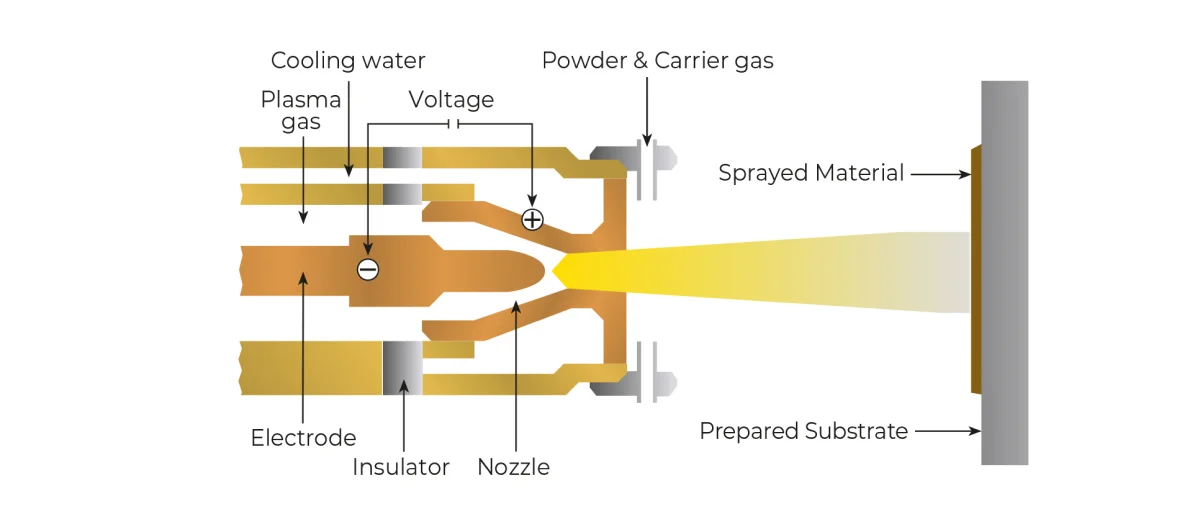
Atmospheric plasma spray (APS) is a thermal spray process used to apply functional and protective coatings to prepared component surfaces in ambient atmosphere. An electric arc converts a plasma-forming gas into a high-temperature plasma jet that heats and accelerates powder particles toward the substrate, where they build a controlled coating layer.
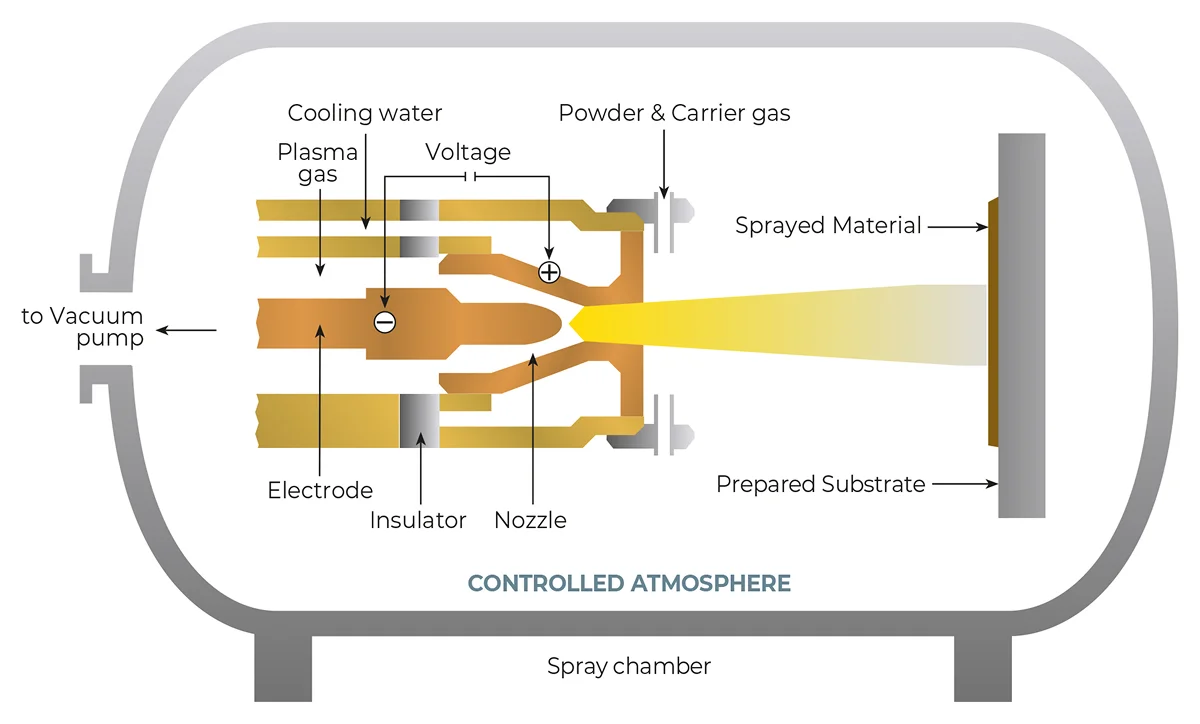
Vacuum plasma spray (VPS), also called low pressure plasma spray (LPPS), is a thermal spray process carried out inside a sealed chamber at reduced pressure. A plasma torch generates a high-energy plasma jet that heats and accelerates powder toward a prepared substrate while the controlled atmosphere limits interaction with ambient air.
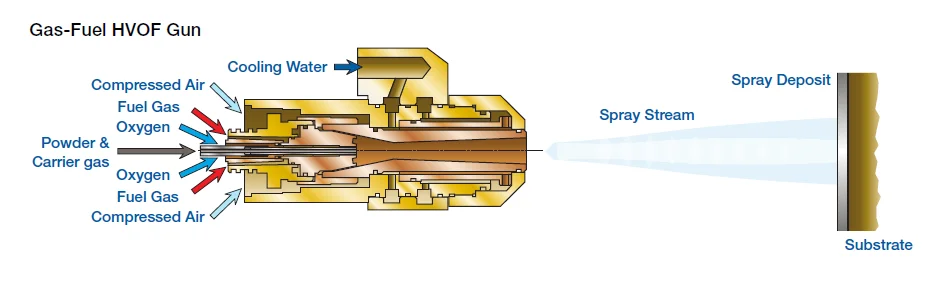
High velocity oxygen fuel spraying (HVOF) is a thermal spray process in which a fuel is combusted with oxygen to create a fast gas stream that accelerates powder toward a prepared surface. Compared with plasma spraying, HVOF generally operates at a lower process temperature while giving the coating particles a higher impact velocity.
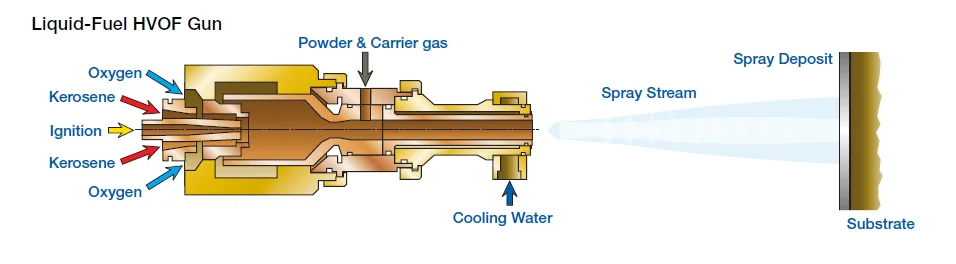
Liquid fuel HVOF is a high velocity oxygen fuel spraying variant that uses a liquid hydrocarbon, typically kerosene, instead of a gaseous fuel. It belongs to the same HVOF spraying family but changes how energy is released and transferred through the combustion section.
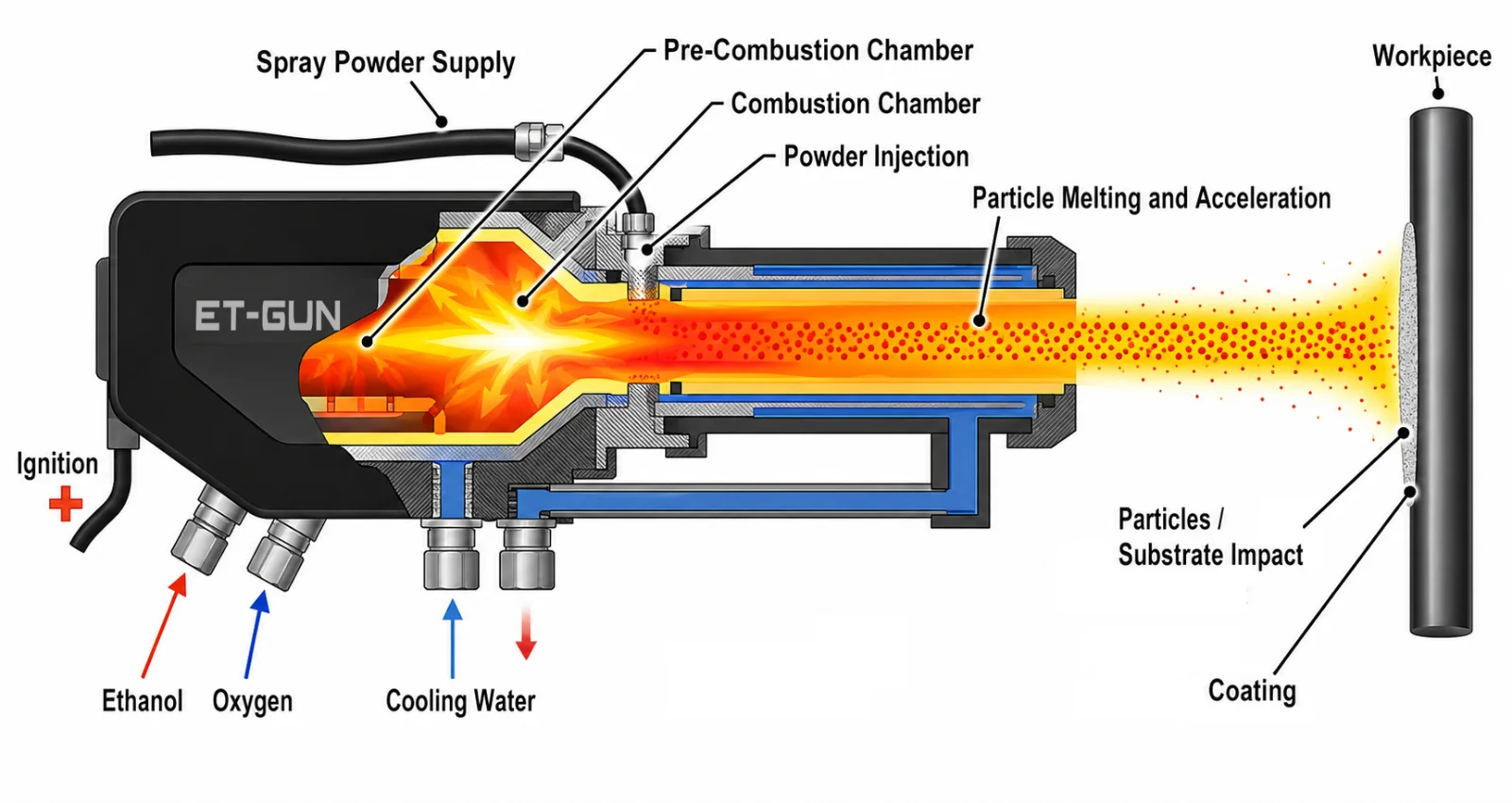
Ethanol HVOF is an ethanol-fueled HVOF configuration for applications where this fuel is preferred over kerosene or gaseous fuels. It is a dedicated variant within the HVOF spraying family, while the general high velocity oxygen fuel process is covered on the main HVOF technology page.
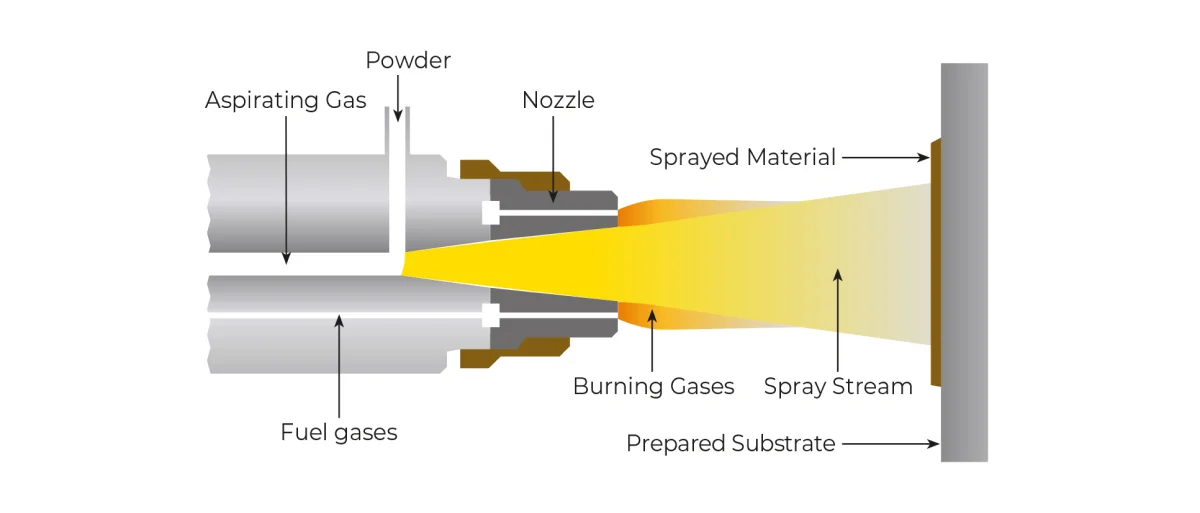
Flame spraying is a thermal spray process in which an oxy-fuel flame heats a coating material and compressed air carries the softened or molten particles toward a prepared surface. The process is used for protective, restorative and functional coatings on a wide range of components.
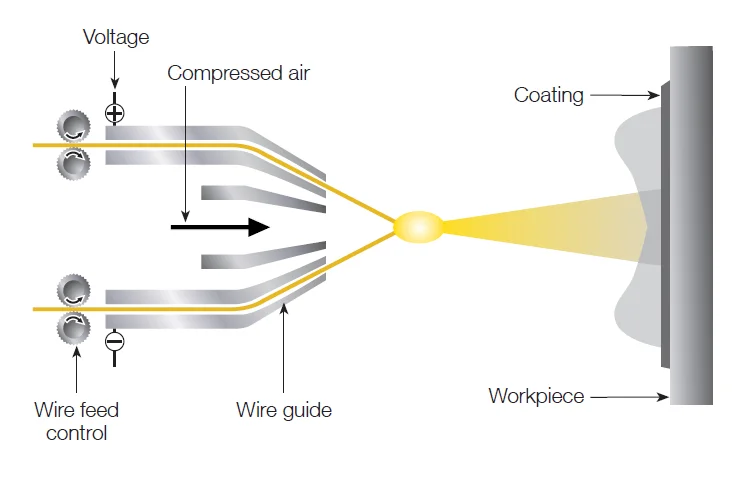
Arc spraying is a thermal spray process in which an electric arc forms between two continuously fed metal wires, melting their tips while compressed air atomizes the molten material and propels it toward the prepared surface. The process is also widely known as arc metallizing and is used to build metallic coatings without a combustion flame.