

Thermal Spray Coatings for Oil and Gas
Oil and gas assets operate in environments where salt water, hydrogen sulfide, entrained sand, pressure and temperature can accelerate corrosion, erosion and wear. Thermal spray coatings help protect critical surfaces, restore functional areas and support longer service intervals across production, transport and processing equipment.
GST supplies thermal spray systems for manufacturers, service companies and corrosion-control contractors that need coating capability in-house or at the worksite. The process route is selected for the component, coating material and dominant damage mechanism, from offshore corrosion to abrasive wear in valves, pumps and drilling equipment.
Thermal spray aluminum (TSA) for corrosion protection
Thermal spray aluminum (TSA) is widely used to protect carbon steel exposed to severe atmospheric and marine corrosion. Typical targets include offshore structures, risers, storage tanks, flare structures and other steelwork where long-term corrosion protection is required. The metallic layer provides a practical surface-engineering route for large steel components and structures that must remain protected in aggressive operating environments.
TSA coating can also be used as part of a strategy for corrosion under insulation. Aluminum is commonly deposited by twin wire arc spraying or flame wire spray, allowing metallic protection to be applied over properly prepared steel surfaces before the specified sealing or insulation system is completed.
Valve coatings
Valve components such as ball valves, seats and gate-valve surfaces are exposed to combined wear, erosion and corrosive media. HVOF processes can apply tungsten carbide and chromium carbide materials to functional surfaces that must retain geometry and resist damage under demanding flow conditions. These coatings are particularly relevant where repeated particle impact or abrasive contact acts on sealing and control surfaces.
For valve coating applications, process selection depends on the substrate, required surface finish, service environment and finishing allowance. Carbide layers are typically followed by controlled grinding or finishing where the sealing or sliding surface requires precise final geometry.
Tungsten carbide coatings for pumps and rotating equipment
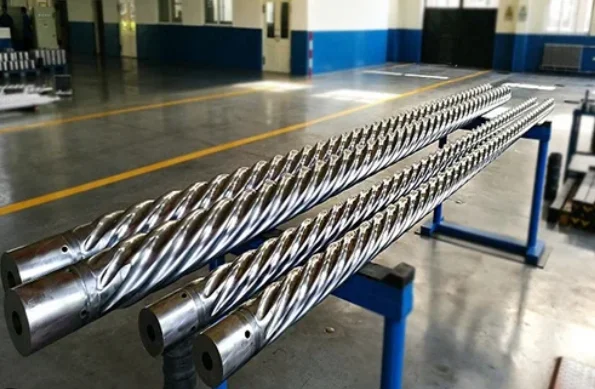
Rotating and reciprocating parts such as shafts, sleeves, plungers and impellers can be protected with tungsten carbide coating systems. Tungsten carbide with cobalt- or chromium-containing binders is used where abrasion, erosion and wear resistance are central requirements, with post-spray grinding selected according to the finished surface specification.
Drilling and downhole tools
Drilling and downhole tools are subject to abrasive contact and erosive media that can rapidly damage working surfaces. HVOF-applied carbide materials can be used on selected areas of drilling tools and positive-displacement motor components as an alternative to hard chrome where the component design and service conditions allow it.
Refinery and processing equipment
Refinery and processing equipment can experience erosion, corrosion and high-temperature attack on pipes, heat-transfer surfaces and related components. Thermal spray is one of the available surface-engineering routes for protecting or restoring these areas, with the process selected around the material, surface condition and exposure mechanism. Boiler-tube applications are addressed separately within GST power-generation solutions.
Coating processes and GST systems
GST uses HVOF spray systems for carbide applications and arc spray systems or flame wire spray for TSA and other wire-fed metallic coatings. The selection is based on coating material, component geometry, production format and whether the work is performed in a workshop or at a site.
Mobile MP30M systems are intended for field-oriented thermal spray work, while robotic MP3000 platforms support repeatable workshop production. GST can integrate the spray process with material feed, controls, handling and process monitoring around the application requirements without turning the technology page into a model specification.
Surface preparation
Surface preparation is essential before thermal spray. Abrasive blasting is used to remove contamination and create the surface condition required for coating deposition; preparation, masking and cleanliness must then be maintained through spraying and subsequent finishing operations.