

Flame Spraying
Flame spraying is a thermal spray process in which an oxy-fuel flame heats a coating material and compressed air carries the softened or molten particles toward a prepared surface. The process is used for protective, restorative and functional coatings on a wide range of components.
As one of the longest-established thermal spray methods, flame spraying combines comparatively simple process hardware with flexible material delivery. It can be configured for powder or wire feedstock and is widely applied where practical surface protection or dimensional restoration is required.
How flame spraying works
In a flame spray process, acetylene or propane is mixed with oxygen and burned at the spray gun to create the heat source. The coating material is introduced into the flame, where it is heated before leaving the gun toward the substrate.
Compressed air atomizes and accelerates the heated material, directing the spray onto the component surface. Process settings, feedstock form and spray distance are selected to suit the coating material, substrate and required application.
Powder and wire flame spraying
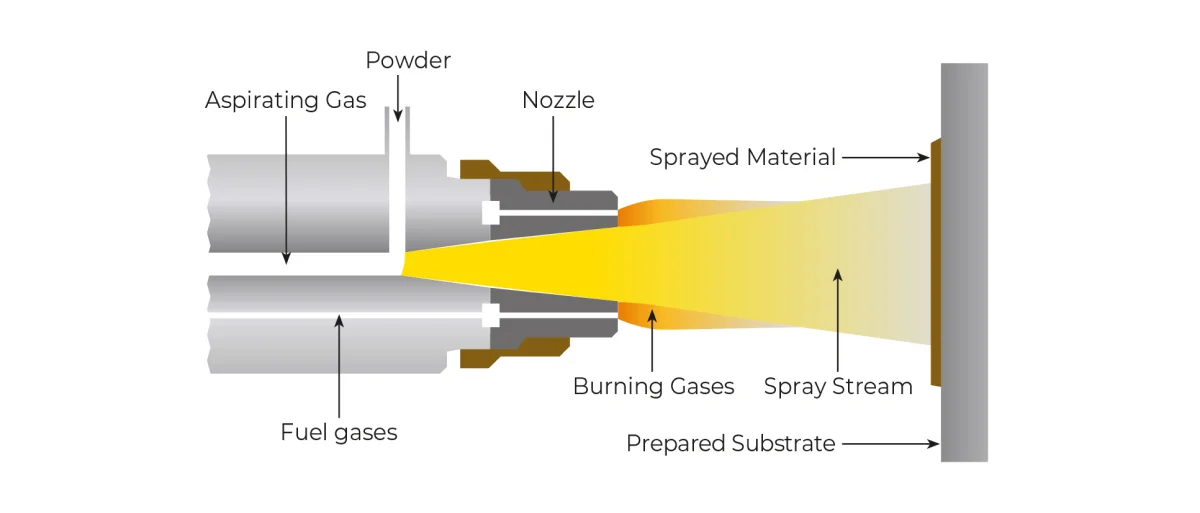
Powder flame spraying feeds metered powder into the oxy-fuel flame and supports metallic, self-fluxing and selected ceramic materials. It is often chosen when feedstock is supplied as powder or when post-spray fusing forms part of the coating route.
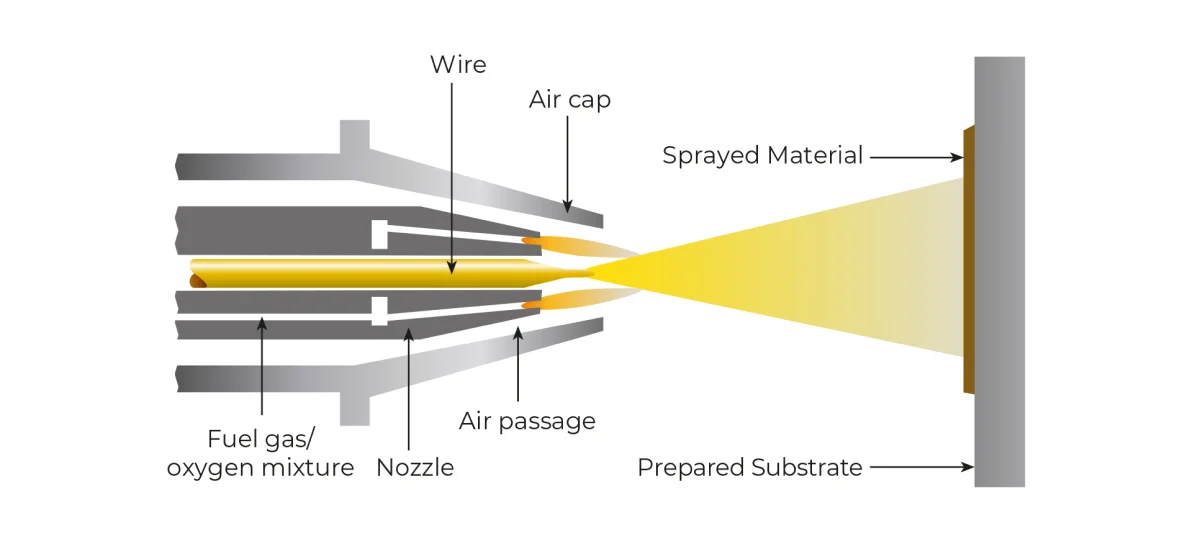
Flame wire spray uses continuous wire feedstock. The wire tip is melted by the flame, atomized by compressed air and projected onto the surface, making the process suitable for zinc, aluminium and selected alloy wires.
Coating materials
Common flame spray materials include nickel- and cobalt-based self-fluxing alloys, zinc, aluminium, bronze and selected ceramics. The choice depends on the required corrosion protection, wear resistance, surface function and compatibility with the substrate.
Some self-fluxing alloy coatings are followed by a separate fusing operation. This step remelts the deposited coating to develop the intended layer structure and surface characteristics for applications designed around a fused coating system.
Applications
Typical applications include corrosion protection, dimensional restoration, wear-resistant surfaces and maintenance of industrial parts. Flame spraying can also support on-site repair where moving a component to a coating workshop is impractical.
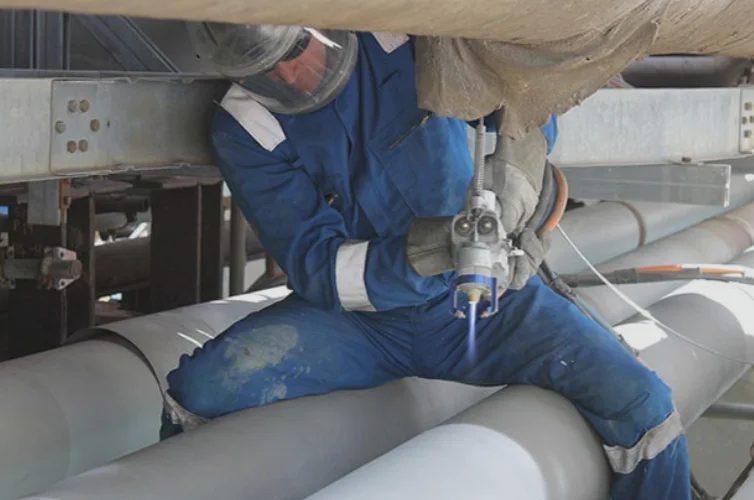
The process is used on shafts, housings, machine elements and structural parts that require renewed or protected surfaces. Powder and wire feed options make it adaptable to maintenance and production coating.
Flame spraying compared with other processes
Compared with plasma spraying, flame spraying operates with a lower-temperature heat source; compared with HVOF spraying, particle acceleration is lower. Arc spraying uses an electric arc rather than an oxy-fuel flame, so the preferred process depends on material, coating function and production requirements.