

Gas Turbine Coatings and Thermal Spray for Power Generation
Gas turbine coatings and thermal spray technologies are used across power generation to protect components exposed to heat, oxidation, hot corrosion, particle erosion and mechanical wear. By matching the coating system to the operating environment, turbine and plant operators can extend component life between maintenance events and help preserve operating efficiency.
GST supplies thermal spray systems for turbine manufacturers, service centers and power plants that perform coating and repair processes in-house. Applications range from hot-section thermal barrier coating and compressor protection to boiler tube repair, steam-turbine refurbishment and hydro-turbine wear control. The page is intended for organizations developing or operating their own coating capability rather than purchasing a coating service.
Thermal barrier coatings for the hot section
Hot-section components often use a layered thermal barrier coating (TBC) architecture. A ceramic top coat based on yttria stabilized zirconia provides low thermal conductivity, while a metallic MCrAlY bond coat supports adhesion and oxidation resistance at the substrate interface.
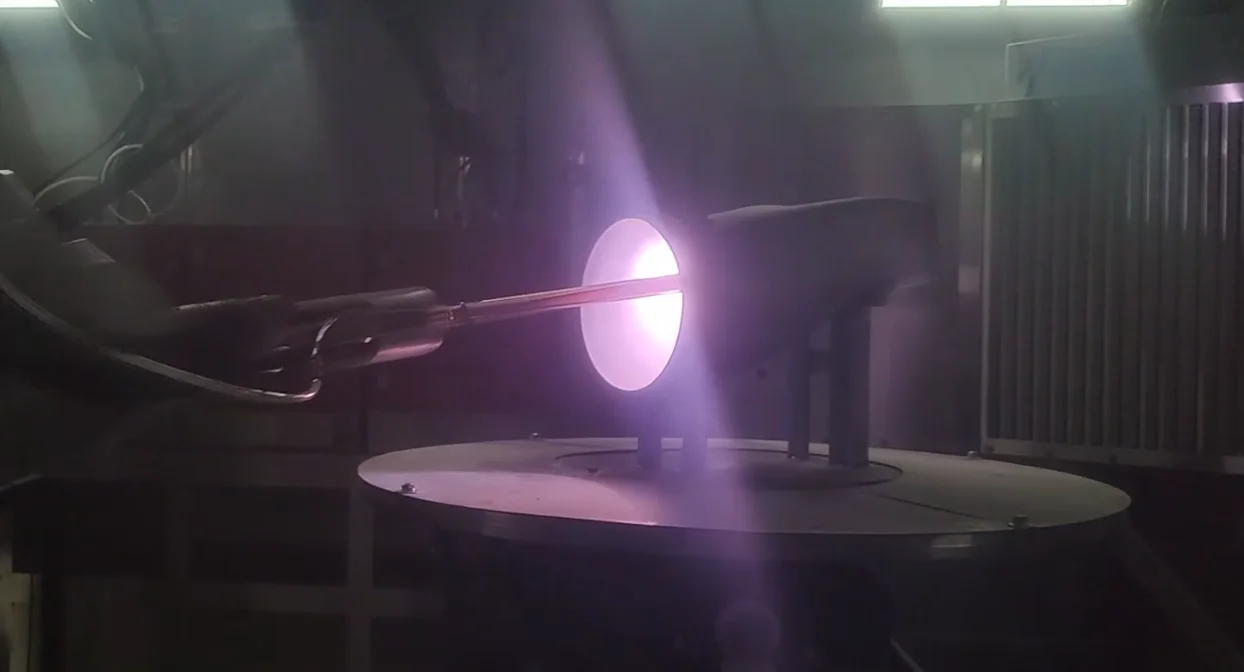
The ceramic top coat is commonly applied by atmospheric plasma spray, while the MCrAlY bond coat can be deposited by vacuum plasma spray or HVOF. Together, these layers protect the base material from high-temperature exposure and help control degradation during repeated thermal cycling.
Turbine blade coating
Turbine blade coating systems are selected to address oxidation, hot corrosion and erosion in the gas path. Depending on the blade position and duty, the coating may use an oxidation-resistant metallic layer, a thermal barrier coating, or a combination designed around the operating environment.
Because turbine blades are high-value components, coating condition is part of the component life-cycle strategy. During overhaul, worn or degraded layers can be removed, the surface can be prepared and inspected, and a new coating can be applied where the blade remains suitable for service.
Compressor and clearance control coatings
Compressor blades and vanes can use wear- and erosion-resistant spray coatings where airborne particles or repeated contact affect the surface. Abradable coatings are also used for clearance control, allowing the rotating blade tips to run against a sacrificial layer while maintaining the designed sealing geometry and supporting engine efficiency.
Boiler tube coating
Boiler tube coating is used where fireside corrosion, oxidation and particle erosion progressively attack tube surfaces. Thermal spray can place corrosion- and heat-resistant alloy layers on exposed areas without changing the basic tube geometry, providing a protective surface for demanding boiler environments.
HVOF and arc spraying are both relevant to boiler applications, depending on the alloy, component geometry and site conditions. For maintenance programs, sprayed layers can be incorporated into planned repair work to protect vulnerable tube areas and reduce the frequency of premature replacement caused by surface loss.
Steam turbines, hydro turbines and auxiliary components
Steam-turbine, hydro-turbine and auxiliary power-plant components also face erosion, wear and, in hydraulic service, cavitation. Carbide-based HVOF coatings and other engineered spray materials can be used on selected shafts, sleeves, blades, runners and wear surfaces where a hard, resistant layer is required.
Repair and recoating in service
Repair and recoating are typically integrated into scheduled service. Existing coating is removed where necessary, the component is inspected, the surface is prepared, dimensions are restored if required, and the specified coating is reapplied under controlled process conditions.
Coating processes and GST systems
GST supports these applications with plasma spray systems, including MP3000-AP for atmospheric plasma spraying and VPS3000 for vacuum plasma spray, as well as gas-fuel and liquid-fuel HVOF spray systems. Arc spray systems are suited to large corrosion-protection tasks such as boiler components where wire-fed deposition is appropriate.
For automated production, MP3000 platforms can provide repeatable process control and recording of key operating parameters, while mobile MP30M systems are intended for applications where work must be carried out closer to the component or at the service location. GST also supports system commissioning and operator training for in-house coating operations.