Aerospace
Process qualification and monitoring of HVOF carbide coatings, plasma-sprayed thermal barrier coatings, bond coats and wear-resistant surfaces.


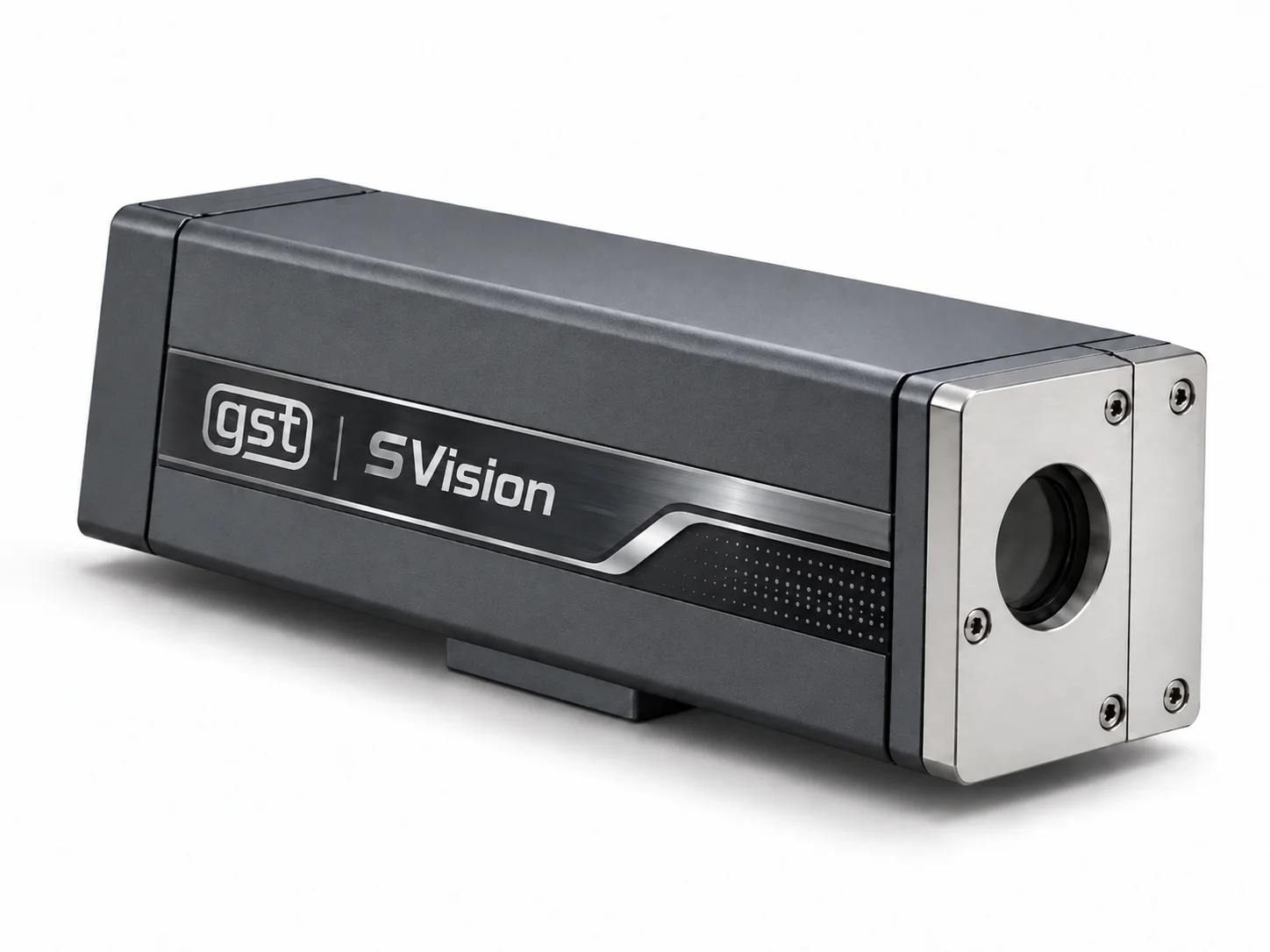

GST SVision is an optical diagnostics and process-monitoring system developed for advanced thermal spray applications. It is designed to analyze the behavior of particles in flight between the spray gun and the workpiece, providing process engineers with quantitative information about the spray plume and particle condition before deposition.
GST SVision is an optical diagnostics and process-monitoring system developed for advanced thermal spray applications. It is designed to analyze the behavior of particles in flight between the spray gun and the workpiece, providing process engineers with quantitative information about the spray plume and particle condition before deposition.
The system can be integrated into plasma spray, HVOF, HVAF, flame spray and arc spray installations for process development, production qualification and routine quality control. By monitoring critical in-flight parameters, GST SVision helps users understand how changes in gas flow, powder feed, gun condition, spray distance and other process variables affect coating formation.
Unlike conventional process monitoring based only on gas pressures, electrical parameters or powder feed rate, GST SVision observes the actual spray plume. This provides a direct connection between machine settings and the thermal and kinetic condition of the particles approaching the substrate.
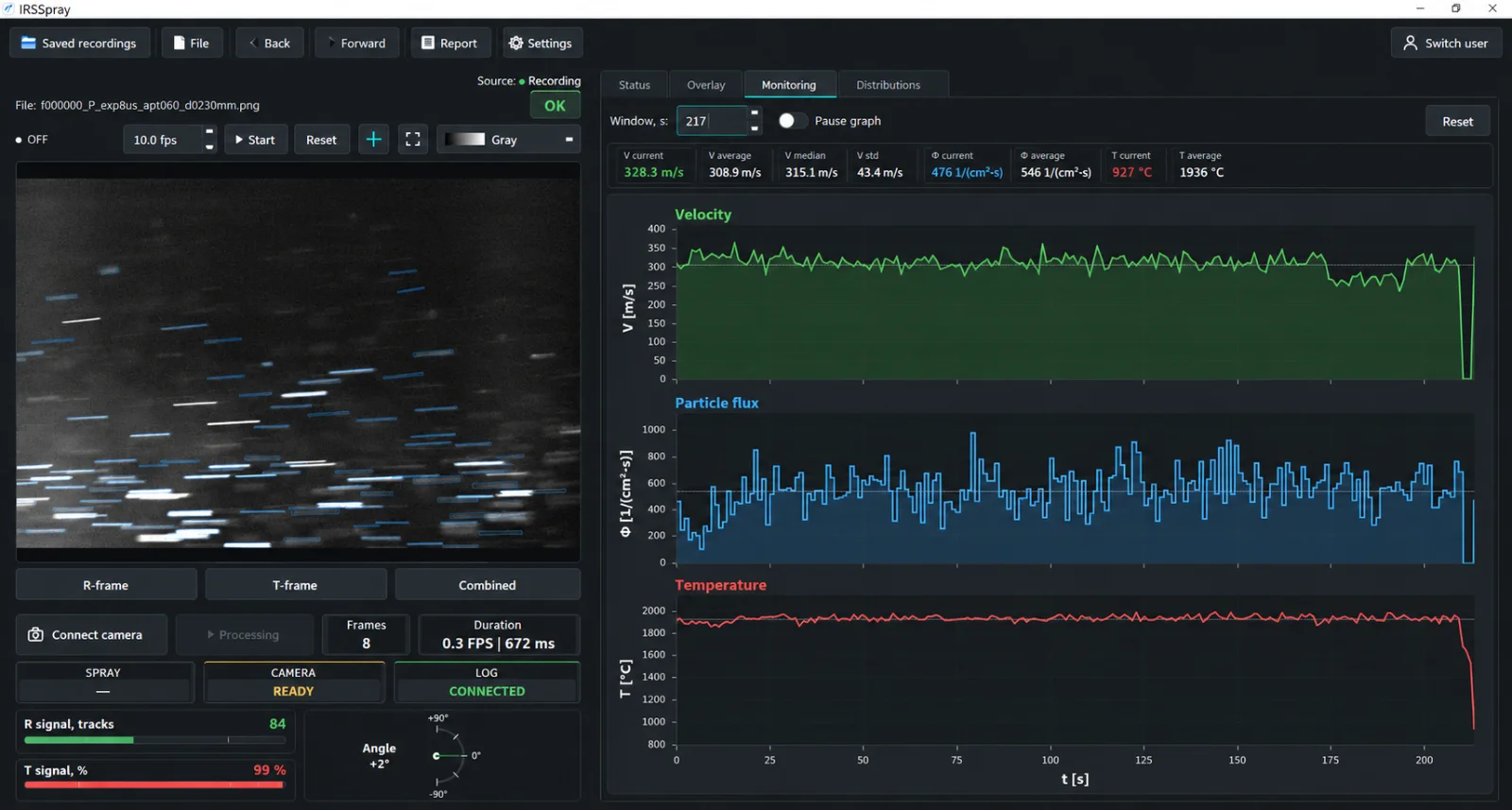
GST SVision uses a high-speed optical measurement system to observe particles moving through a defined measurement area within the thermal spray plume. Image-processing and signal-analysis algorithms evaluate particle motion and radiation to calculate key process parameters.
Depending on the configured measurement package, the system can monitor particle velocity, particle temperature, spray-plume position, plume width, spray direction and divergence. Particle-size analysis can also be incorporated where supported by the selected process and optical configuration.
The measurement area can be adapted to the width and geometry of the spray plume, allowing the same diagnostic platform to be used with different spray processes, guns and operating conditions. This is particularly useful in facilities operating several thermal spray technologies from a common process-development laboratory.
Stable coating quality depends on more than maintaining the programmed machine settings. Changes in spray-gun condition, powder morphology, injector geometry, gas supply or process environment can alter particle behavior even when the nominal recipe remains unchanged.
GST SVision provides an additional process-control layer by measuring the result of these variables directly in the spray plume. Changes in average particle velocity may indicate variations in gas dynamics, combustion conditions or nozzle condition. Changes in particle temperature can indicate differences in thermal input, powder injection or residence time. Monitoring plume position and geometry can reveal gun alignment problems, injector changes or instability in the spray process.
This information allows process engineers to identify deviations before they result in unacceptable coating quality.
Particle velocity is one of the most important parameters in HVOF and other kinetic-energy-dominated thermal spray processes. GST SVision tracks particle movement through the optical measurement area and calculates the in-flight velocity of the spray particles. Velocity data can be used to compare spray parameters, optimize deposition conditions and detect changes in gun performance. Consistent particle velocity contributes to repeatable particle deformation, coating density and bonding behavior.
Particle temperature provides information about the thermal state of the feedstock before impact with the substrate. Monitoring temperature is particularly important in plasma spray and flame spray processes, where insufficient heating can reduce particle deformation while excessive thermal exposure may increase oxidation or alter feedstock chemistry. Combined analysis of particle temperature and velocity provides a significantly more complete picture of the spray process than either parameter alone.
GST SVision can be used to analyze the macroscopic geometry and stability of the spray plume. Depending on the configured system, process parameters may include:
Monitoring these parameters makes it possible to detect changes in injector alignment, gun hardware condition or process stability.
During coating development, GST SVision allows engineers to compare different process windows without relying exclusively on destructive coating tests. Process-development work can include evaluating:
Measured particle data can then be correlated with coating properties such as porosity, hardness, deposition efficiency, oxide content and bond strength. This can reduce the number of trial-and-error coating runs required during process development.
Once a thermal spray process has been qualified, GST SVision can be used to establish a reference process window.
Production measurements can then be compared against the validated reference values. Deviations in particle temperature, velocity or plume geometry may indicate that the spray process is moving outside the qualified operating range.
This makes the system useful for incoming equipment qualification, scheduled process verification, preventive maintenance and production quality assurance.
The following values are based on the published SprayWatch 2S benchmark used as the functional reference for GST SVision. They must be confirmed for the final GST SVision hardware and software configuration before publication.
| Parameter | Benchmark value / proposed GST SVision target |
|---|---|
| Particle temperature | Approx. 1,000-4,000 °C |
| Particle velocity | Approx. 1-2,000 m/s |
| Relative particle flux | Relative value or particle count |
| Spray position | Approx. -12 to +12 mm |
| Spray width | Approx. 1-53 mm |
| Spray angle | Approx. +10° to -10° |
| Spray divergence | Approx. 0-15° |
| Particle size measurement | Approx. 10 µm resolution / process-dependent |
| Measurement area (W × H) | Adjustable, approx. 15 × 13 mm to 53 × 47 mm |
| Compatible processes | Plasma, HVOF, HVAF, arc spray, flame spray |
| Cooling | Filtered compressed air |
| Data analysis | Real-time monitoring and stored-data analysis |
GST SVision can be incorporated into complete GST thermal spray production cells and process-development installations. The diagnostic system can operate together with:
For automated production lines, measured process data can also be used as part of a broader quality-monitoring architecture, allowing production records to be associated with specific coating programs, components or batches.
Two identical machine recipes do not necessarily guarantee identical particle conditions.
Nozzle wear, powder properties, injector condition, gas supply and environmental factors can change the spray plume without producing an obvious change in the programmed equipment parameters.
GST SVision provides visibility into what is actually happening between the spray gun and the component.
This gives operators and process engineers an additional tool for:
Process qualification and monitoring of HVOF carbide coatings, plasma-sprayed thermal barrier coatings, bond coats and wear-resistant surfaces.
Monitoring of plasma and HVOF processes used for turbine components, seals, shafts and high-temperature coating systems.
Process control for wear- and corrosion-resistant HVOF coatings on valves, pump components, sleeves and drilling equipment.
Development and production monitoring of thermal spray processes used for engine, transmission and wear components.
Detailed investigation of relationships between spray parameters, particle behavior and final coating properties.
Routine verification of qualified thermal spray processes and detection of process drift.
GST SVision is designed to analyze in-flight thermal spray particles and spray-plume behavior. Depending on the configured measurement package, parameters can include particle velocity, temperature, relative particle flux, plume position, width, angle and divergence.
The system is intended for plasma spray, HVOF, HVAF, flame spray and arc spray applications. Final measurement capability depends on the selected optical configuration and process conditions.
These parameters directly influence how particles heat, accelerate, deform and bond when they reach the substrate. Monitoring both parameters provides valuable information about process stability and coating formation.
Yes. Once a qualified process window has been established, measured particle and plume parameters can be compared with reference values to identify process drift.
Yes. GST SVision is particularly useful for comparing different spray parameters, powders, gun configurations and process windows during coating development.
It can help identify changes in particle velocity, temperature or plume geometry that may be associated with nozzle or gun-component wear. The cause of the deviation should then be confirmed during equipment inspection.
Yes. GST SVision can be incorporated into automated GST thermal spray cells together with robots, manipulators, positioners and process-control equipment.
No. Particle diagnostics complements metallographic and mechanical coating testing. Its main advantage is that it provides real-time information about the spray process before coating inspection.
To purchase a product you like, you need to order it. There are several scenarios for how this can be done.
Choose the product you like and click the "Book now" button. When placing an order, fill out the form. Enter information in the fields: full name, phone number and e-mail. Then the manager will send you e-mail to confirm your consent to make the purchase.
If you have any questions related to the product select the product you like and click the "Ask a question" button. Then fill out the form with contact information and send an application. The manager will contact you for further discussion.
We work with legal entities. And we provide few payment options.
We work on Standard purchasing Contract basis. Payment type depends on product and final customer country/address.
If you have any questions related to the product select the product you like and click the "Ask a question" button. Then fill out the form with contact information and send an application. The manager will contact you for further discussion.
We can deliver your ordered goods with recommended logistic companies on EXW/DDP basis. Delivery time depends on final customer country/address. Terms and conditions can be found in invoice/offer.
Ready to delivery lead time is longer for customized equipment/systems.
If you have any questions related to the product select the product you like and click the "Ask a question" button. Then fill out the form with contact information and send an application. The manager will contact you for further discussion.